How to Mix Drum and Bass: Rolling, Double Drops and the Switch
Drum and bass isn't mixed like house. Blend two D&B tracks over the outgoing outro and the floor sags for half a minute between drops. D&B DJs time the next drop to the outgoing track's structure instead, and they keep the energy up by never playing an outro at all. Here is how.
How a drum and bass track is built
Most D&B tracks follow the same shape, in blocks of 16 and 32 bars:
- Intro, usually 32 bars: drums and atmosphere, with the bass held back.
- First drop, 32 to 64 bars: the full groove and the bassline.
- Breakdown, 8 to 32 bars.
- Second drop, 32 to 64 bars.
- Outro, often only 16 bars, mirroring the intro.
At 174 BPM a bar lasts 1.4 seconds, so 16 bars go by in 22 seconds and 32 in 44. That is why D&B DJs play each track for about two minutes, not the three or four of a house set.
Four ways to bring the next track in
All four start the incoming track 16 bars before its drop, with its bass off and its highs down.
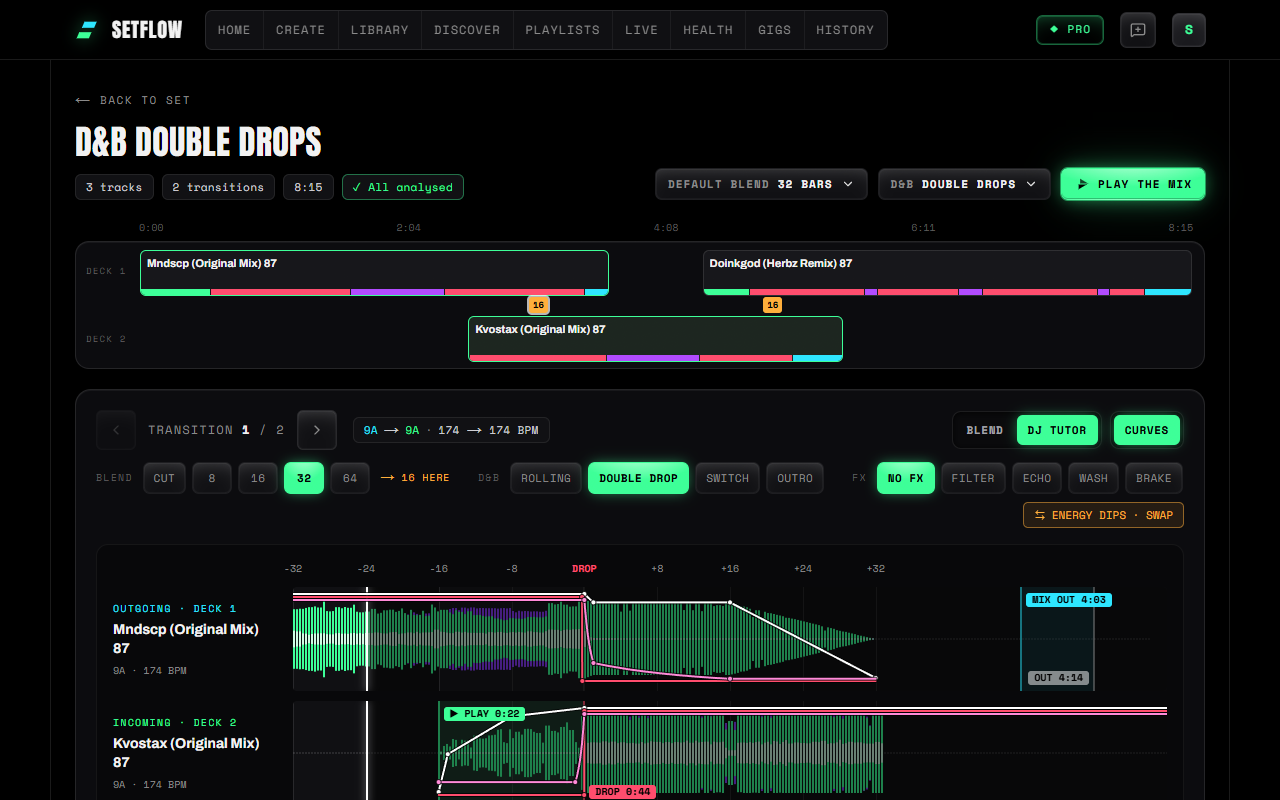
- Rolling. The incoming drop lands 32 bars before the outgoing outro, inside its second drop. The outgoing breakdown and outro never play, and the set keeps rolling. This is the everyday mix.
- Double drop. The incoming drop lands on the outgoing second drop: both drops hit at once. The outgoing track rides under for 16 bars without its bass, then fades.
- Switch. The incoming intro plays over the outgoing breakdown, and you cut the outgoing track dead on the drop, so the crowd gets a different second drop from the one it expected.
- Outro. The incoming drop lands where the outgoing outro would start. The outgoing track plays both its drops: good when you want a track heard in full.
One bassline at a time
Two D&B basslines together turn to mud, so the bass swap is fast and lands on the drop. Turn the outgoing LOW out a beat before the drop, then slam the incoming LOW in on the downbeat. Keep the incoming highs down until the last bar of the run-up: two breakbeats clash in the hats long before you hear it in the kicks. Read more in how to do a bass swap.
Counting a double drop
- Find the outgoing track's second drop: the main section after its breakdown.
- Cue the incoming track 16 bars before its own drop.
- Press play 16 bars before the outgoing second drop, on the downbeat, with the LOW off.
- Bring the fader up over the first 8 bars, and open the highs over the last bar.
- On the drop: outgoing LOW out, incoming LOW in. Both drops play.
- Take the outgoing highs down, then fade it over the next 16 bars.
Count in bars, not beats, and reset on every phrase change. If you're new to counting, start with DJ phrasing.
Get the tempo right first
D&B usually sits at 170 to 176 BPM. Some DJ software reads it at half tempo (87) or two thirds (116), and a beatgrid can land on the off-beat, because the kick plays on one and the “and” of three rather than every beat. Check that both tracks read in the 170s and that the grid sits on the kick and snare before you plan a mix.
Let SetFlow plan it
In the Mix view, a transition between two analysed D&B tracks lands drop to drop. Pick a style for the whole set, Rolling, Double drops or Mix of both, or choose Rolling, Double drop, Switch or Outro for one transition. DJ Tutor counts you through every move on your own tracks, and Hear the blend plays it. The Mix view is part of Pro.
Frequently asked questions
Why does drum and bass sound wrong when I mix it like house?
House is mixed over the outgoing track’s outro: the next drop lands on its last bar. Drum and bass outros are short and sparse, so that leaves the floor on two breakbeats and no bass for half a minute between drops. D&B DJs land the next drop on the outgoing track’s structure instead, usually inside or on its second drop, and never play its outro.
What is a double drop?
Two tracks beatmatched so that their drops land on the same downbeat. It is the signature move of drum and bass. You start the incoming track so that its run-up ends exactly where the outgoing track’s second drop begins, keep only one bassline on the drop, and let the outgoing drop ride under for a few phrases before you take it out.
How do I work out when to start the next track for a double drop?
Count back from the outgoing track’s second drop by the length of the incoming run-up. If the incoming track has 16 bars before its drop, press play 16 bars before the outgoing second drop. Most D&B intros are 32 bars, so cue the incoming track 16 bars before its drop and start it then.
What BPM is drum and bass?
Most drum and bass sits between 170 and 176 BPM, with 174 the most common. Some DJ software reads it at half that, around 87, or at two thirds, around 116, because of the broken drum pattern. Both tracks need to be read at the same tempo before they will beatmatch.
Does key matter when mixing drum and bass?
For melodic tracks such as liquid, yes: long blends of clashing keys sound sour. For heavier, more atonal styles it matters less, and over a short run-up with the incoming bass held back a clash is mostly in the pads. On a double drop two full drops play together, so pick tracks whose keys sit together.
Can SetFlow plan my drum and bass transitions?
Yes. In the Mix view, transitions between two analysed drum and bass tracks land drop to drop: Rolling by default, or Double drop, Switch or Outro, for the whole set or one transition at a time. DJ Tutor shows every move. The Mix view is part of Pro, and a Weekend Pass unlocks it too.
Ready to build better sets?
Import your Rekordbox, Traktor, or Serato library and generate perfectly mixed DJ sets in seconds.
Try SetFlow Free